Please be aware that we are NOT affiliated nor associated with any other learntotrade website. We do not cover any type of crypto trading in our program or encourage anyone to invest in crypto trading.
Please be aware that we are NOT affiliated nor associated with any other learntotrade website. We do not cover any type of crypto trading in our program or encourage anyone to invest in crypto trading.
The Democrats handed the Republicans a big blow in the U.S. midterm election on November 3, flipping control of both the House of Representatives and Senate. Together, they form Congress. The Democrats were able to capitalize on U.S. President Trump’s historic unpopularity.
President Trump said the big midterm election losses were not a reflection on him; in fact, he said if he was on the ballot, “we would have won IN A LANDSLIDE.”
Other Republicans are not so sure. Some inside the Republican Party were quick to blame Trump’s handling of the economy, tariffs, war in Iran, vanity construction projects, coziness with Russian President Vladimir Putin, and indifference to voters as reasons for the huge midterm election defeat.
This included Democratic upsets in deep-red Republican states, including Texas, Kansas, Maine, Michigan, and South Carolina.
While most Republicans fully expected to lose control of the House, they believed they would hold onto the Senate. This would create a balance of power and could allow President Trump to move forward with his agenda.
But with Democrats taking control of Congress, not only will President Trump need to work with Democrats, but also contend with their desire to investigate his administration and stymie his agenda.
How Did the Stock Market Respond to the Midterm Election?
Wall Street responded enthusiastically to the U.S. midterm election results. On Wednesday, November 4, U.S. stocks jumped by 1,240 points, or approximately 2.5%, while the S&P 500 advanced 1.5%, and the Nasdaq advanced 1.7%. The TSX, meanwhile, climbed more than 1.5%.
Investor optimism is being buoyed by the fact that President Trump will have to work with Democrats when it comes to his agenda—something he hasn’t had to do over the last two years. This clarity and risk mitigation can help boost the stock market.
These kinds of checks and balances can also keep a lid on excessive government spending and borrowing, which strengthened U.S. government bonds and sent yields lower.
What Do the Midterm Election Results Mean for Canada?
The U.S. midterm election results were a big rebuke to Trump’s presidency. And while the Democrats control Congress, he still has veto power. Although he has promised to work with Democrats and not simply veto everything that comes across his desk, he could still use it.
In the lead-up to the U.S. midterm elections, it was reported that President Trump and Canadian Prime Minister Mark Carney were progressing on trade talks. A Democratic-run Congress does not necessarily mean that the U.S. will scrap tariffs with Canada entirely, but earlier this year, Congress passed a resolution condemning the tariffs.
At the same time, the first two years have shown Canada how important it is to diversify trade away from the U.S. The outcome of the U.S. midterm elections could be a positive for the Canadian economy, but recent history shows it behooves Canada to build up its list of global economic trading partners.
Learn-to-Trade.com, Canada’s Leader in Stock Market Trading Courses
Learn-to-Trade.com is Canada’s oldest and leading provider of stock market trading courses. Over the years, the trading experts at Learn-to-Trade.com have helped tens of thousands of Canadians, of every skill level, learn how to trade more confidently and profit more consistently.
We also provide a unique Lifetime Membership that allows you to re-attend any part of the program as often as you’d like.
To learn more about Learn-to-Trade.com’s stock market trading courses, contact us at (416) 510-5560 or by e-mail at info@learn-to-trade.com.


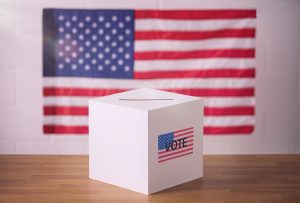 The Democrats handed the Republicans a big blow in the U.S. midterm election on November 3, flipping control of both the House of Representatives and Senate. Together, they form Congress. The Democrats were able to capitalize on U.S. President Trump’s historic unpopularity.
President Trump said the big midterm election losses were not a reflection on him; in fact, he said if he was on the ballot, “we would have won IN A LANDSLIDE.”
Other Republicans are not so sure. Some inside the Republican Party were quick to blame Trump’s handling of the economy, tariffs, war in Iran, vanity construction projects, coziness with Russian President Vladimir Putin, and indifference to voters as reasons for the huge midterm election defeat.
This included Democratic upsets in deep-red Republican states, including Texas, Kansas, Maine, Michigan, and South Carolina.
While most Republicans fully expected to lose control of the House, they believed they would hold onto the Senate. This would create a balance of power and could allow President Trump to move forward with his agenda.
But with Democrats taking control of Congress, not only will President Trump need to work with Democrats, but also contend with their desire to investigate his administration and stymie his agenda.
