

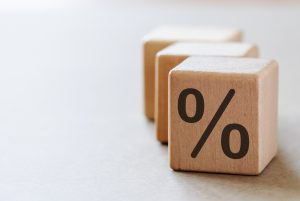
 The U.S. Federal Reserve increased its benchmark interest rate on September 16 for the first time in three years. The central bank raised interest rates by a quarter point to a target range of 3.75% to 4.0%.
The higher interest rates are expected to result in higher borrowing costs for mortgages, credit cards, and auto loans. On the other hand, higher interest rates are expected to help combat stubbornly high inflation, which sits at 3.4%—well above the Fed’s 2% target.
The increase was unanimously approved by a 12-0 decision by the Federal Open Market Committee (FOMC). The Federal Reserve also signalled it could raise interest rates a second time this year to a range of 4.0% to 4.25%.
The interest rate hike comes at a time when Americans are already struggling with higher costs for gas, groceries, and housing. It also comes just seven weeks before the all-important U.S. midterm elections.
Kevin Warsh, the newly appointed Federal Reserve Chair, who was nominated by President Trump, noted that “the plain fact is that inflation is too high and has been for too long.” A big reason why inflation remains high is the war in Iran, which has juiced energy prices.
The interest rate hike seemingly flies in the face of what President Trump has long wanted, and that’s for interest rates to come down drastically. And one big reason why he considered Warsh for the role.
In fact, back in April, President Trump said he would be “disappointed” if Warsh didn’t cut interest rates. Warsh never explicitly said he would cut interest rates, but rather act as “an independent actor” as Fed chair.
The interest rate hike was a prudent move and was widely expected by Wall Street.
How Did President Trump Respond to the Interest Rate Hike?
Suffice it to say, President Trump was not entirely pleased with the interest rate hike. On Truth Social, his preferred social media platform, the president wrote, “Interest Rates in the United States should be 1%, or less, because we are the Best Credit in the World — BY FAR.”
The president’s opinion is in direct opposition to what should happen to interest rates in a high inflationary environment.
Inflation was cooling when President Trump entered the Oval Office for a second time in January 2025. But it started to heat back up again after he introduced “Liberation Day” in April 2025. The war in Iran, which began in late February 2026, further exacerbated inflation, making everything from gas to steel, fertilizer, and oil more expensive.
In theory, had President Trump done nothing after the start of his second term but play golf, chances are good the U.S. economy would have achieved its desired soft landing on inflation and not needed to rely on action from the Federal Reserve.
Just because a country has a great credit rating doesn’t mean it should have the lowest interest rates. That logic might make sense for a real estate developer looking for a commercial loan, but it’s not what the Federal Reserve looks at.
Central banks don’t lower interest rates when the economy is strong. When the economy is strong, they raise interest rates to make borrowing more expensive and cool inflation. Conversely, central banks lower interest rates when the economy is weak to make borrowing cheap to spur investment and growth.
Learn-To-Trade.com, Canada’s Leader in Stock Market Trading Courses
Right now, the U.S. economy needs higher interest rates. The big question is, how will that impact the stock market? To find out, ask the trading experts at Learn-To-Trade.com.
Learn-To-Trade.com is Canada’s oldest and leading provider of stock market trading courses. Over the years, the trading professionals at Learn-To-Trade.com have helped tens of thousands of Canadians, of every skill level, learn how to trade more confidently and profit more consistently.
We also provide a unique Lifetime Membership that allows you to re-attend any part of the program as often as you’d like.
To learn more about Learn-To-Trade.com’s stock market trading courses, contact us at 416-510-5560 or by e-mail at info@learn-to-trade.com.

